.jpg)
Explore Broken Chair
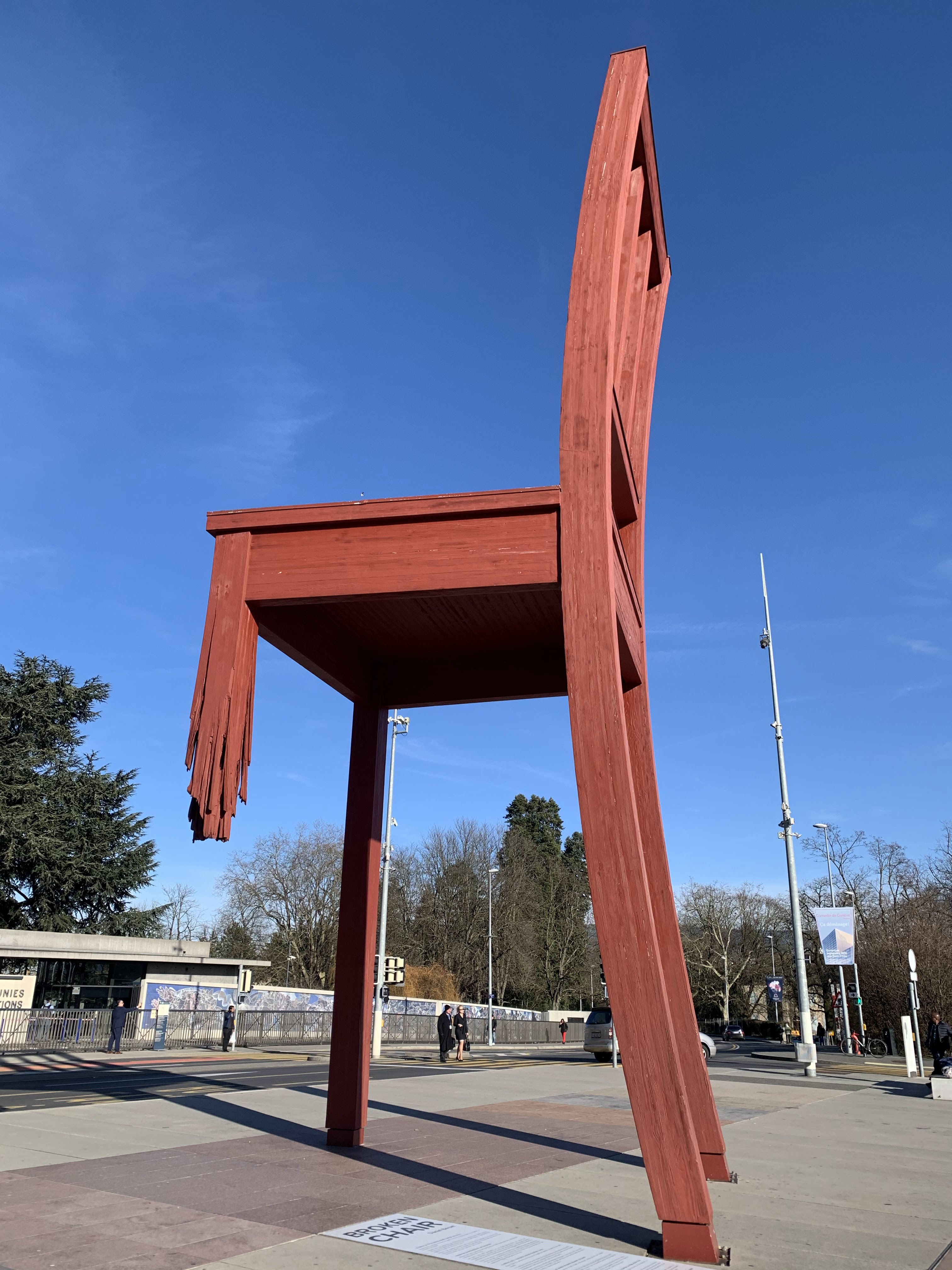
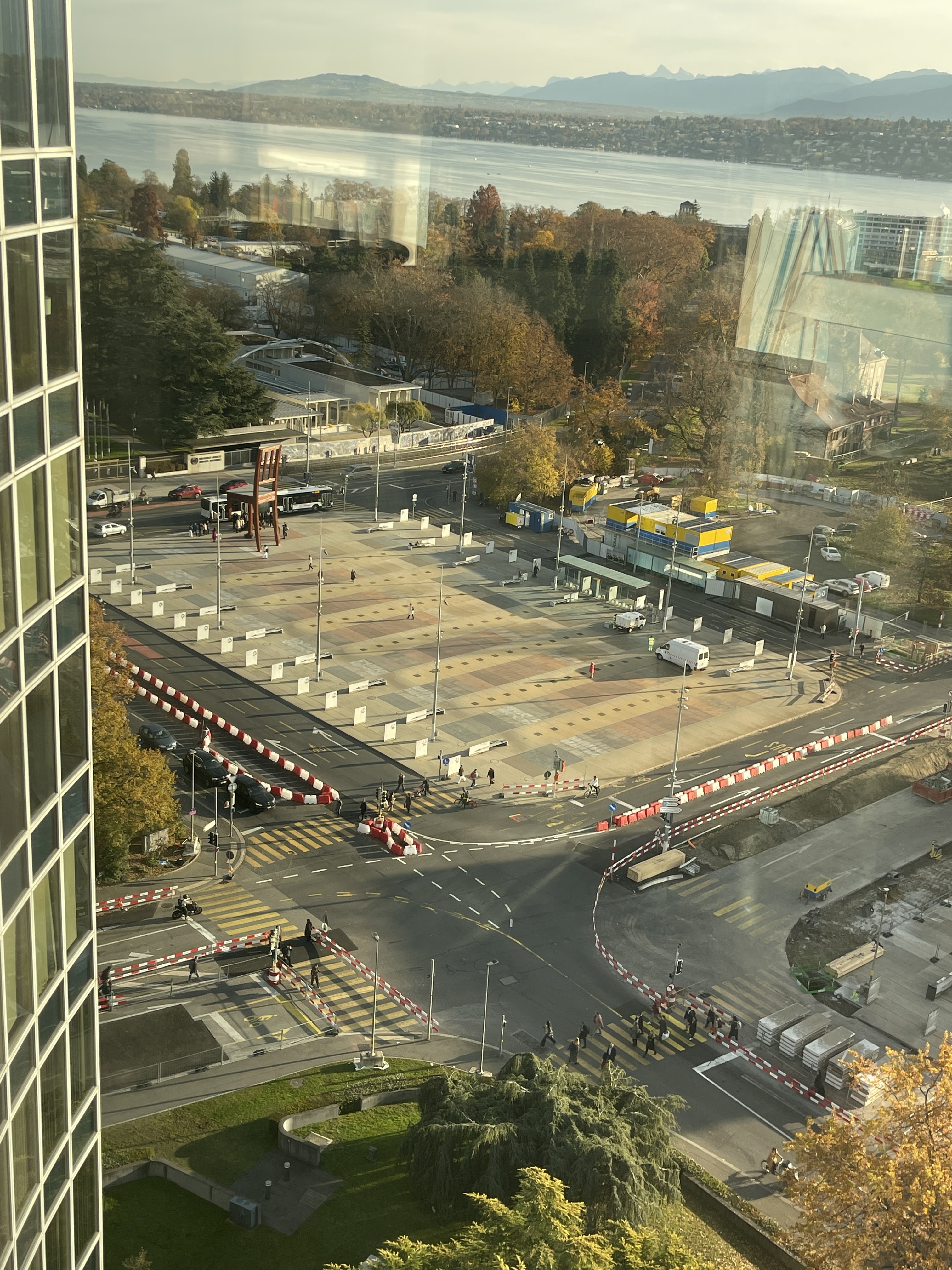
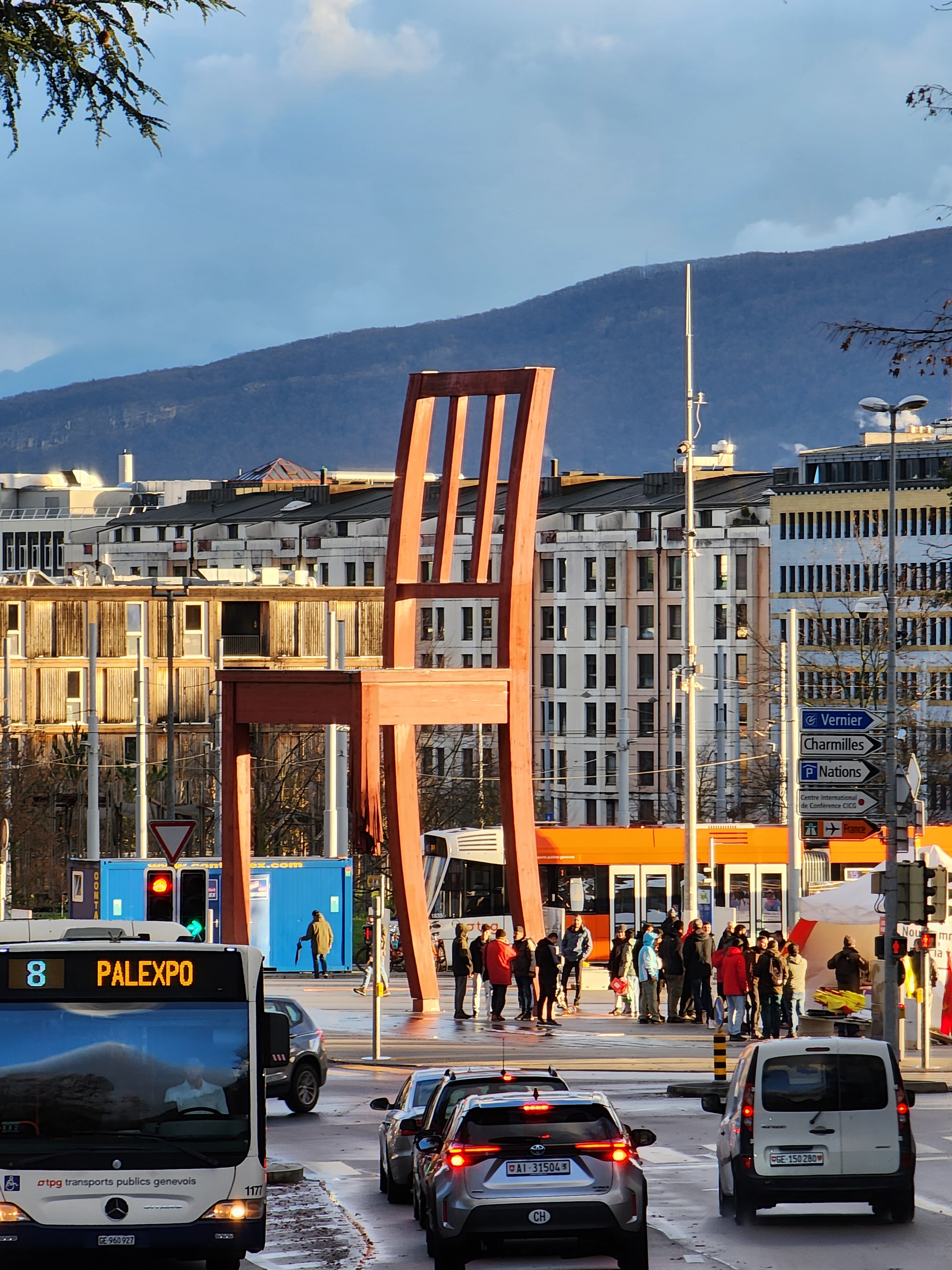
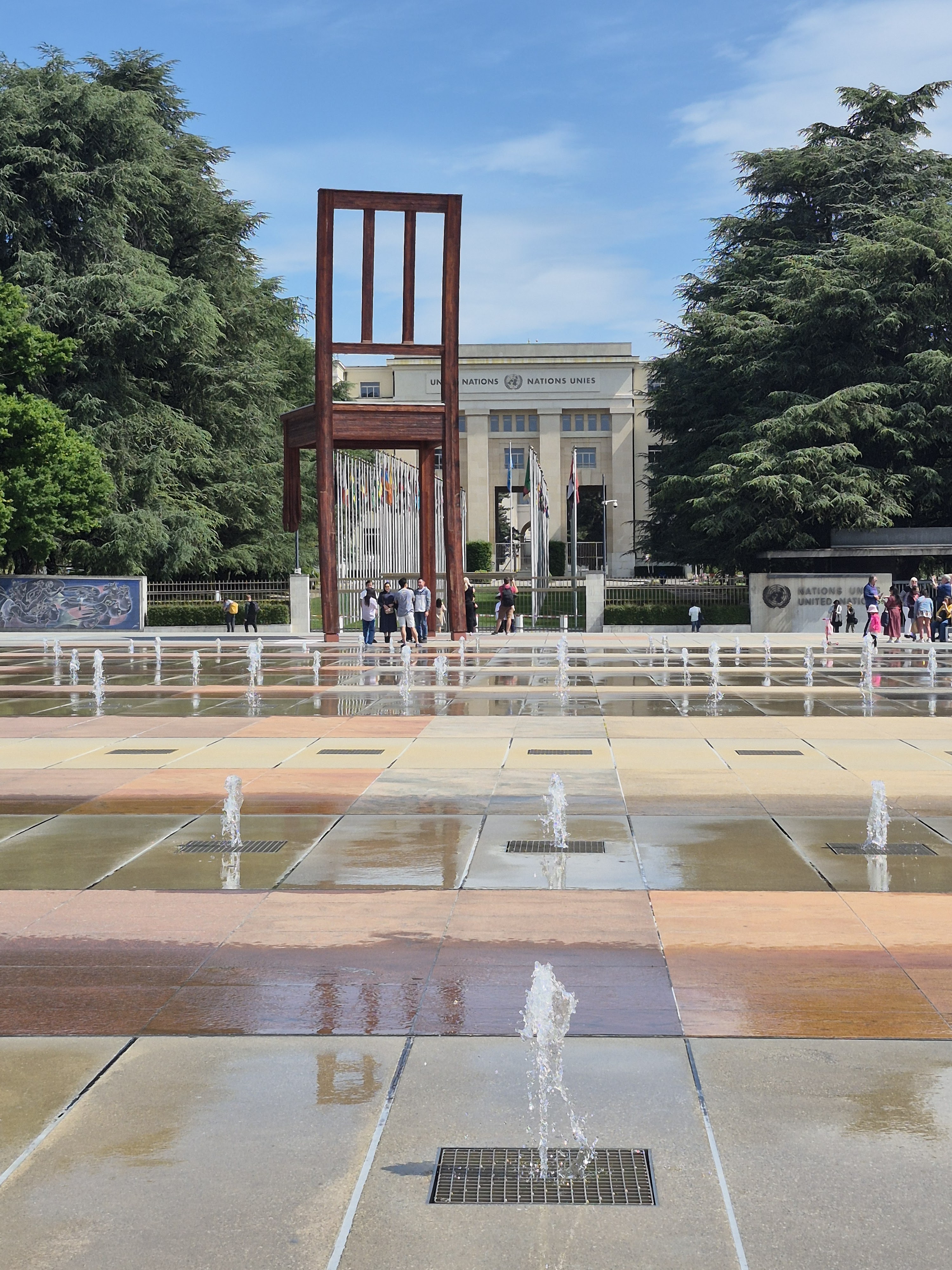
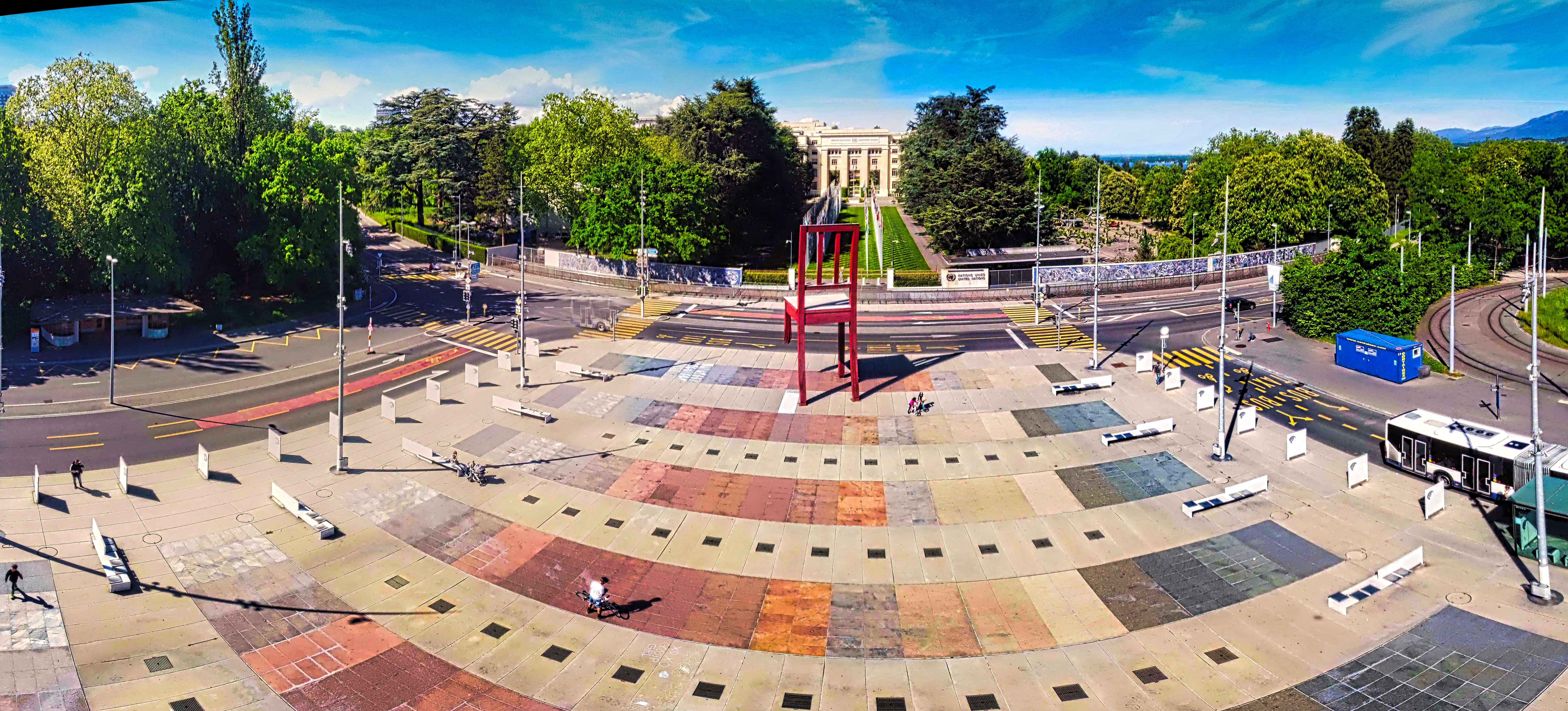
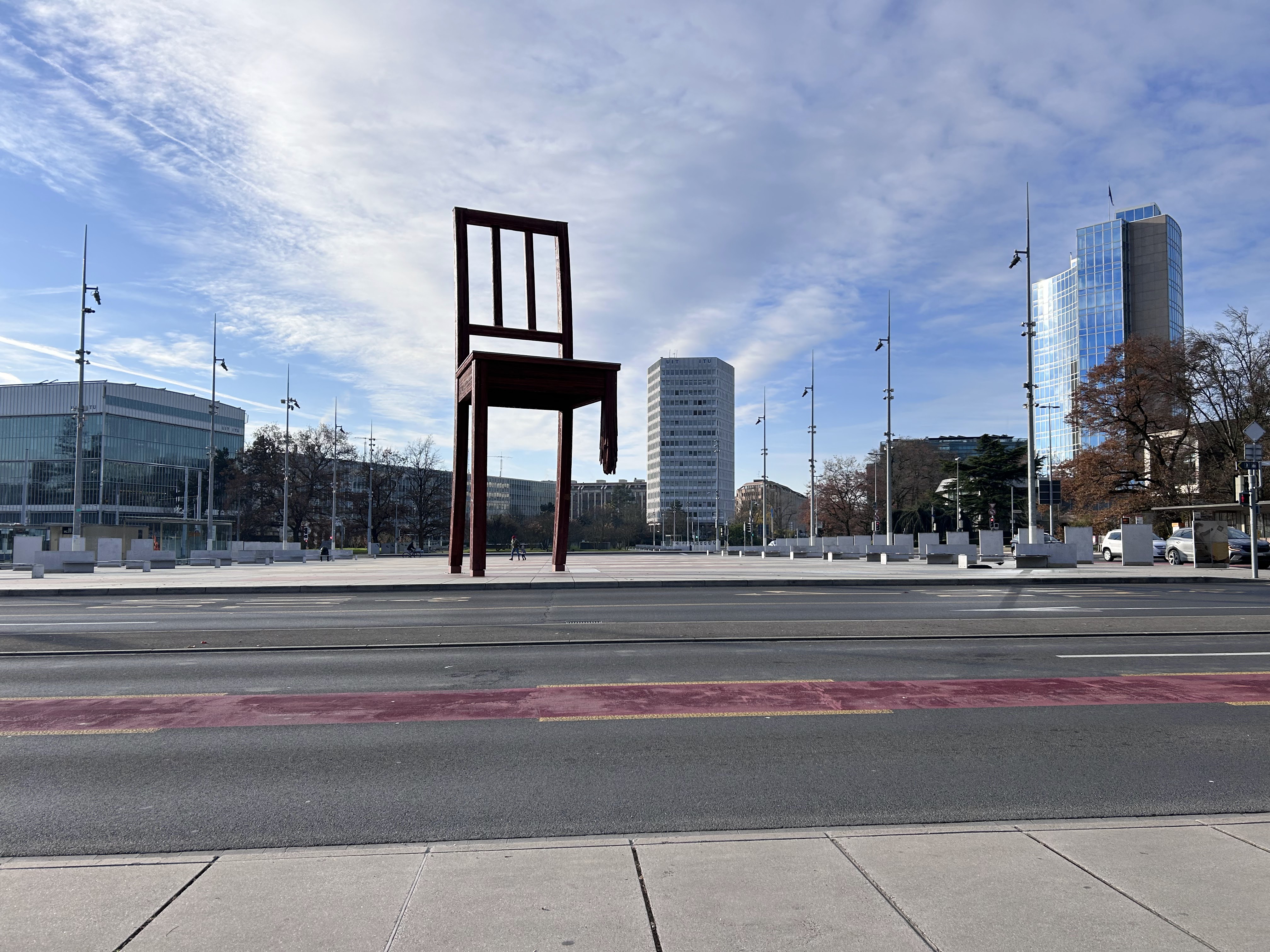
The Broken Chair is a monumental wooden sculpture located across the street from the Palace of Nations (United Nations European Headquarters) in Geneva, Switzerland. Designed by the Swiss artist Daniel Berset and constructed by carpenter Louis Genève, the 12-metre-high, 5.5-ton sculpture features a broken leg, symbolizing opposition to land mines and cluster bombs.
Visit Tips
- The sculpture is located in a public square and is free to visit 24/7.
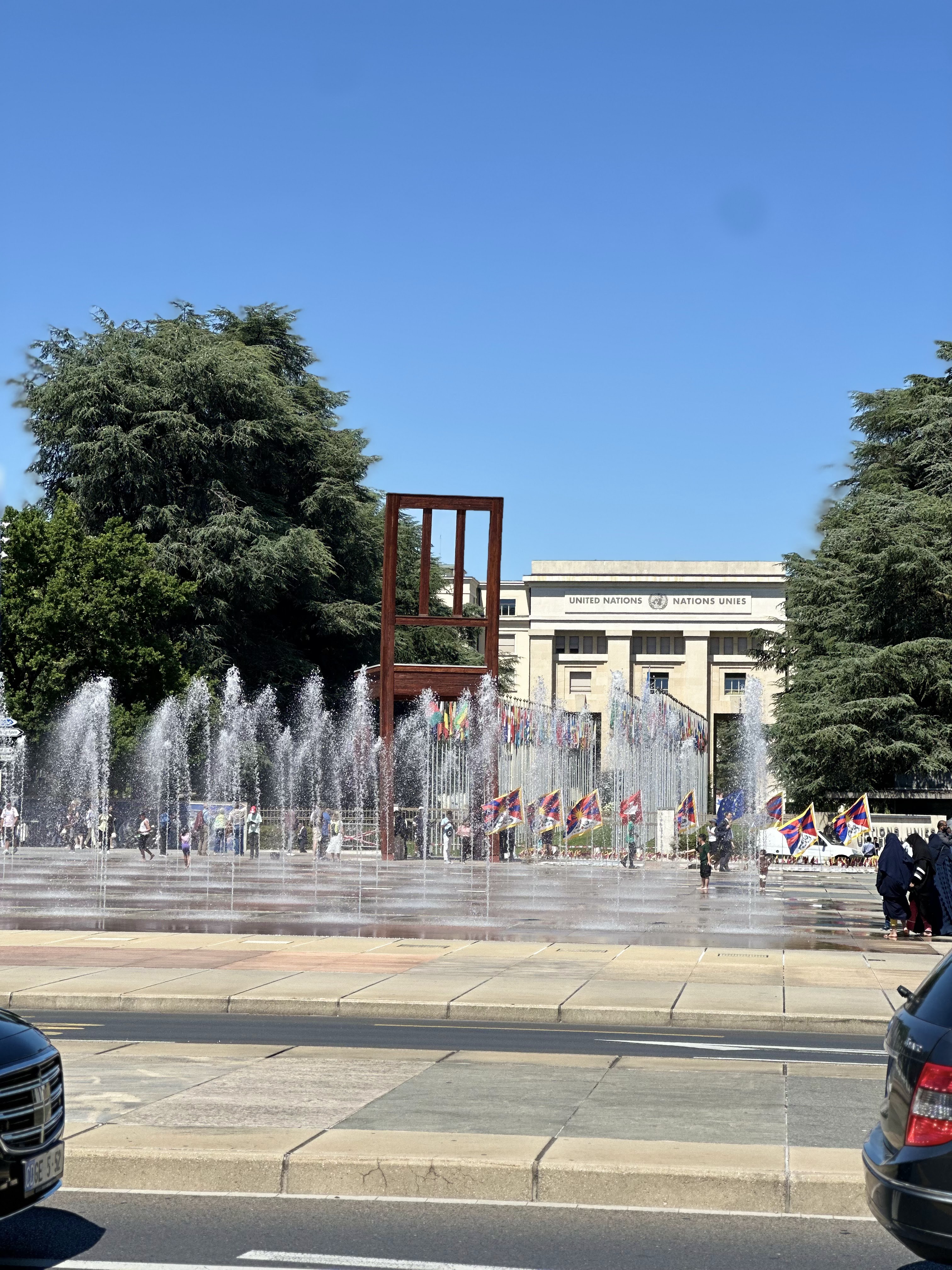
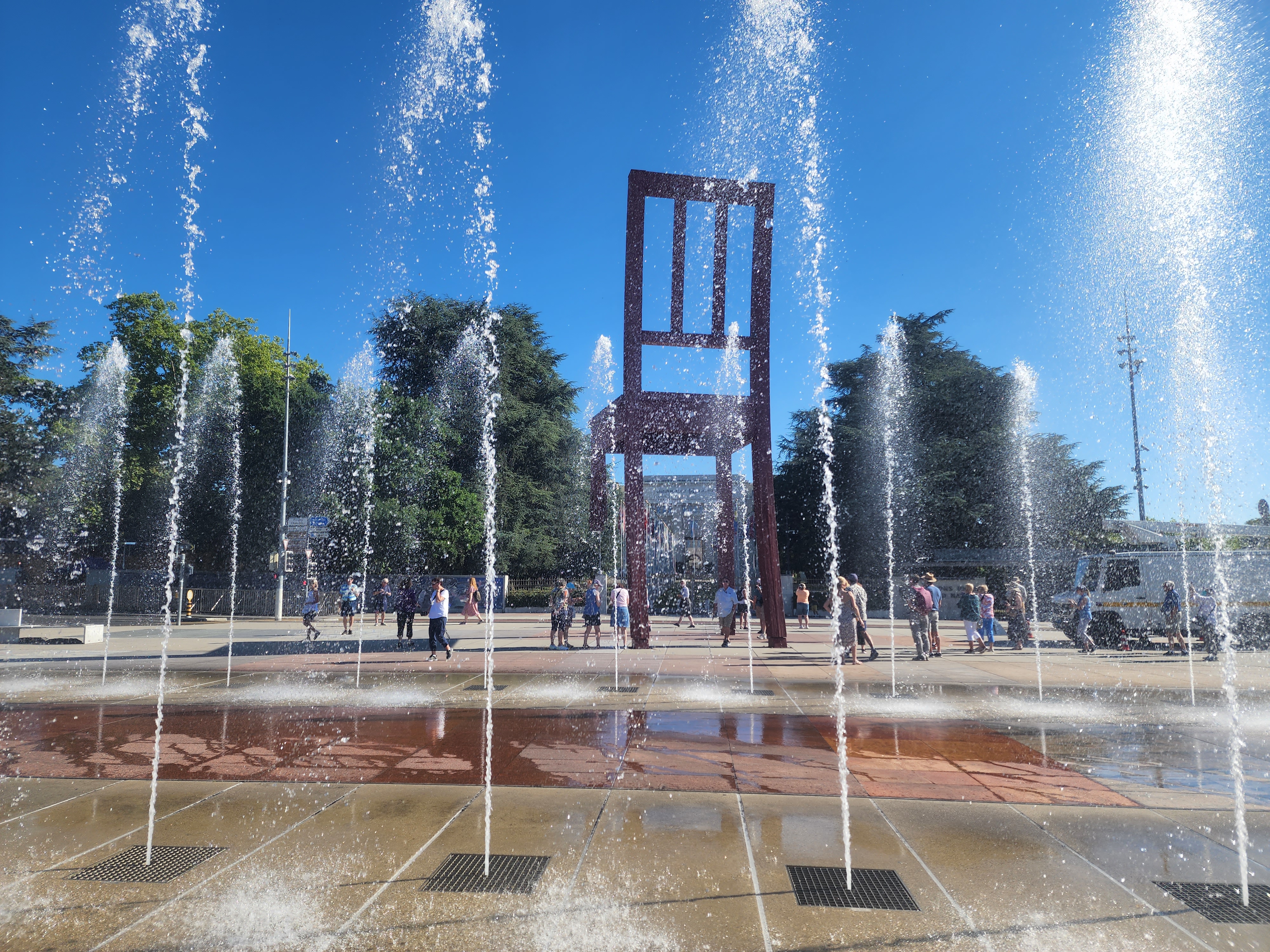
- It's a perfect spot for photography, with the spectacular Palace of Nations fountains in the background.
- The square is frequently used for peaceful assemblies and demonstrations.
- Recommended to combine with a tour of the Palace of Nations (booking required) and the International District.
Highlights
- Symbol against landmines and cluster bombs
- Landmark of Geneva's International District
- 12-metre-high monumental wooden sculpture
- Located right next to the UN European Headquarters
About Broken Chair
About Broken Chair
History & Origins
The Broken Chair was originally commissioned by Handicap International in 1997 to urge all nations to sign the Ottawa Treaty banning landmines. It was initially planned to remain in front of the Palace of Nations for only three months, but due to its profound impact and strong public support, it was kept permanently.
Symbolism
The massive chair, made of 5.5 tons of wood, features a broken leg that represents the devastating injuries caused by landmines and cluster munitions. At the same time, its three solid legs and towering backrest symbolize the resilience and dignity of the victims, as well as humanity's hope for peace.
Recommended Route
Explore Geneva's International District
Arrive at Place des Nations
Admire and photograph the Broken Chair sculpture
Watch the fountain display on the square
Visit the UN European Headquarters (booking required)
Walk to the nearby International Red Cross and Red Crescent Museum
Basic Information
Official Name
Broken Chair
Attraction Type
Tourist Attraction
Google Rating
4.5 (9,193)
Accessibility
Partial
Plus Code
64FQ+4G Geneva, Switzerland
Address
1202 Geneva, Switzerland
Visiting Hours
Reserve Access
Open 24 hours a day
Best Time to Visit
Spring: Pleasant weather, perfect for walking along Lake Geneva
Summer: Sunny days, fountains are on, excellent for photography
Best Time to Visit
Autumn: Beautiful autumn scenery in Geneva
Winter: Can be combined with visits to nearby museums
When the fountains are on, they make a perfect photographic composition with the UN building and the Broken Chair.
Admission Information
Entrance Fee
Free admission
Parking
Hourly rates apply at the nearby underground parking (Parking des Nations)
Guided Tours
Guided tours of the UN Palace of Nations require advance booking on their official website
How to Get Here
From Geneva City Center
Take Tram 15 and get off at the 'Nations' stop. It is about a 1-minute walk from there.
From Geneva International Airport (GVA)
Take Bus 5 or 28 and get off at the 'Nations' stop. The ride takes around 15-20 minutes.
From Geneva Cornavin Train Station
Take Tram 15 (direction: Nations) from outside the station and get off at the terminus 'Nations'. The journey takes about 10-15 minutes.
Public Transport
Geneva's public transport (TPG) is highly convenient. Tourists staying in Geneva hotels receive a free 'Geneva Transport Card' for unlimited rides on local transport. You can reach Place des Nations via Tram 15, or Buses 5, 8, 11, 22, and 28.
Walking
If you are around the Right Bank of Lake Geneva or the International District, walking is a great option. The Broken Chair is prominently visible at the Place des Nations.
Driving
There is an underground parking facility nearby (Parking des Nations). Since it is located in the international organization district, street parking can be limited, so public transport is highly recommended.
Photo Gallery
The Beauty of Broken Chair
.jpg)
Broken Chair Panorama
.jpg)
Place des Nations
.jpg)
The Broken Leg
.jpg)
Looking Up
.jpg)
Fountains and Sculpture
.jpg)
Geneva International District
.jpg)
Massive Wooden Structure
.jpg)
Symbol of Peace
Visitor Reviews
Reviews can be viewed via Google Maps.
A very powerful sculpture! Learning about its anti-landmine message makes it even more meaningful.
A must-see landmark in Geneva. It's right in front of the UN, and the fountains in the square are beautiful too.
Massive and spectacular. Standing underneath it gives you a strong visual impact.
A very educational piece of public art. Very easy to get to, the tram stops right there.
A symbol of peace and dignity. You must come and see it when in Geneva.
Incredible wooden structure, and the message it conveys is very powerful. 100% recommended.
Beautiful monument!! You'll definitely pass by it before taking the UN tour.
Not just a photo spot, but an appeal for world peace. The atmosphere around it is great.
Frequently Asked Questions
Q:Do I need a ticket to see the Broken Chair?
No. The Broken Chair is located on a public square (Place des Nations) in Geneva and is free to visit 24/7.
Q:Can I visit at night?
Yes, the square is illuminated at night and offers a more peaceful atmosphere. However, daytime provides better lighting for photography.
Q:How to get there by public transport?
You can take tram 15, or buses 5, 8, 11, 22, 28 to the 'Nations' stop. It's a 1-minute walk from there. Tourists staying in Geneva hotels can use the free Geneva Transport Card.
Q:Is there parking nearby?
Yes, the underground 'Parking des Nations' is located right next to the square and charges hourly rates. However, public transport is recommended as street parking is limited in the International District.
Q:What does the Broken Chair symbolize?
The broken leg represents the devastating injuries caused by landmines and cluster munitions, while the three solid legs and backrest symbolize the resilience and dignity of victims and the call for peace.
Q:How much time should I spend visiting the Broken Chair?
Visiting the sculpture and taking photos at the square usually takes 15 to 30 minutes. We recommend combining it with a tour of the UN European Headquarters opposite the square or the nearby Red Cross Museum for a half-day trip.